here is a business school classroom in Ahmedabad where Ratul Vijh used to make beats between lectures. Classmates would wander over and comment. Not always kindly. He kept making them anyway. Today, he says, some of those same people have his music set as their ringtone.
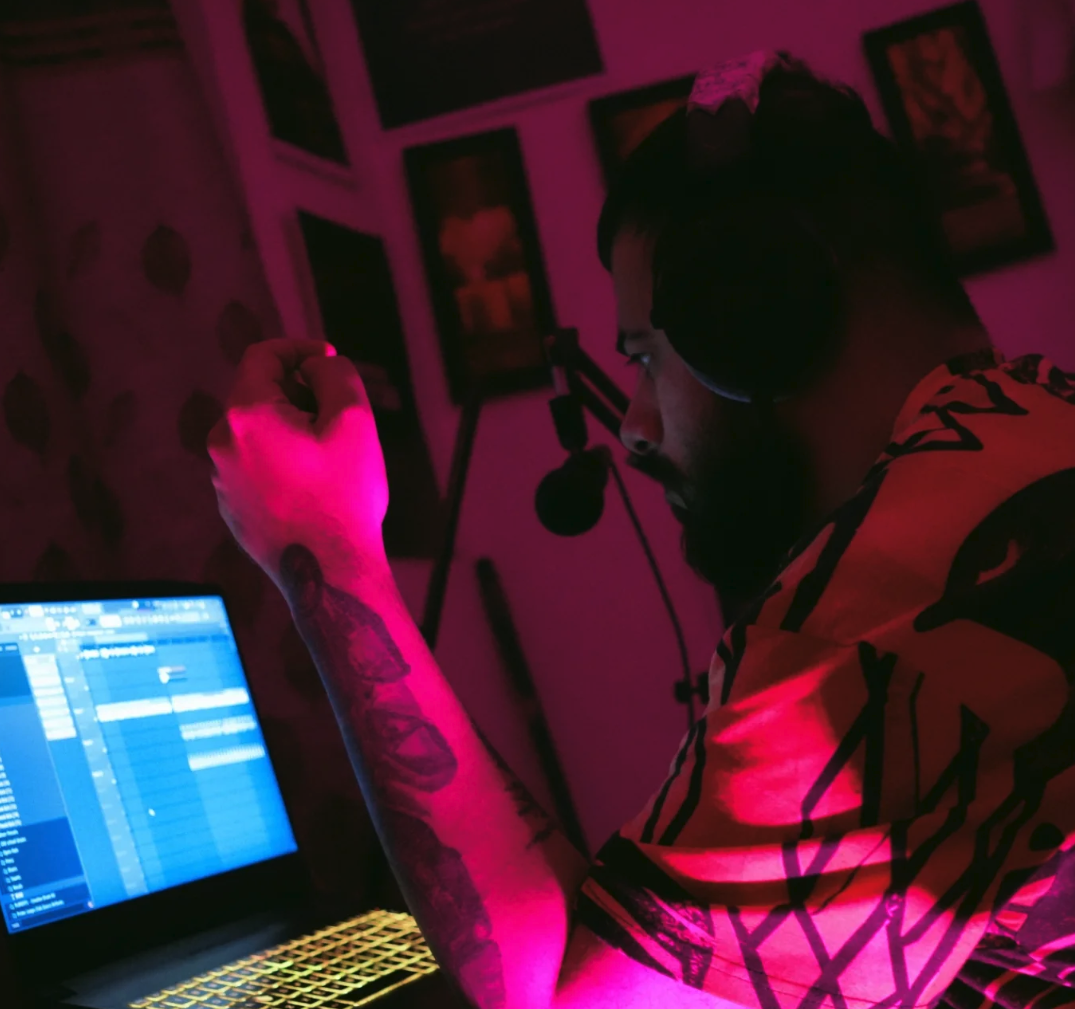
The music press loves that story. The doubted kid, proven right. I want to tell a different one. The interesting thing about Hisab, the name Ratul produces under, is not that he made it. It is how he arranged his life so that making it did not cost him the music.
I have known him since college, where he was my senior. I sat down with him for the first Distillery conversation to talk about craft. We ended up talking about the whole scene, and about what the artists coming up behind him are walking into.
01. A scene with a day job
For most of the last decade, Indian hip-hop had no day shift. It had the gully, the cypher, the SoundCloud upload, the freestyle filmed on a phone. In 2019 Gully Boy put it on cinema screens, and the street suddenly had a soundtrack the whole country could hum.
Then it became an export. In July 2024 Hanumankind released Big Dawgs, produced by Kalmi. It reached number 23 on the Billboard Hot 100 and number 9 on the Global 200, and Hanumankind went on to sign with Capitol. Spotify reported that streams of Indian artists in international markets grew more than 2,000% between 2019 and 2023. By 2024, close to half of what Indian artists earned on the platform came from listeners outside the country.
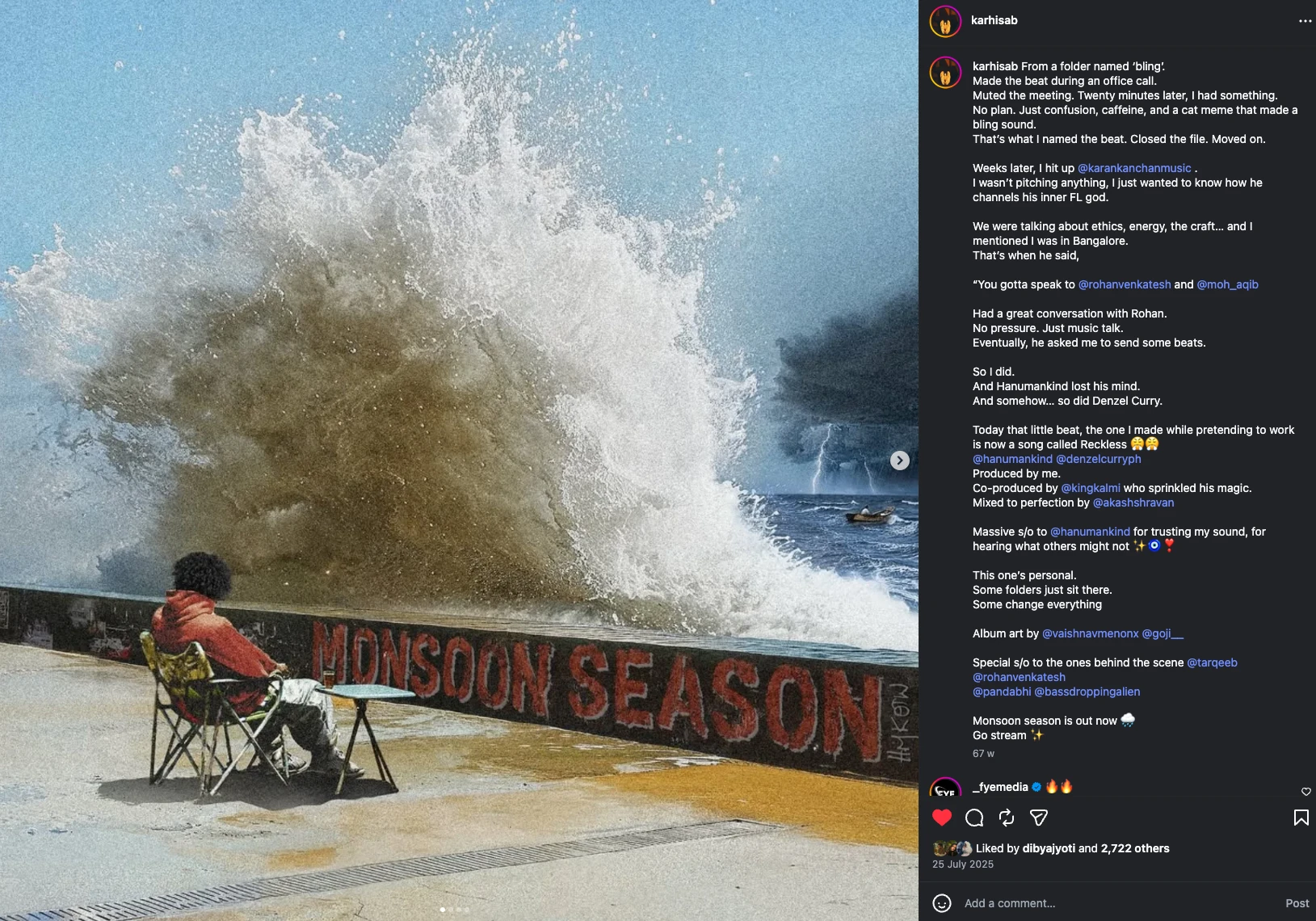
Read those numbers the way a career counsellor would. Rap in India is now a job. It has labels, budgets, briefs, deadlines and clients. Hisab works inside it. He co-produced Reckless, the Hanumankind and Denzel Curry record that went out through Capitol, Def Jam and UMG. He co-produced Boom Shaka with Phenom for KR$NA and Dhanda Nyoliwala, now the biggest number on his ledger.
A job is a good thing. It is also the thing that quietly changes the sound.
02. Mainstream is pattern recognition
Hisab has a precise theory of the mainstream.
“Mainstream is pattern recognition, he told me. ”
Most people are tired and carrying their own lives. They want something they already know how to move to. His example was the stomp, stomp, clap of We Will Rock You, a rhythm a stadium learns in one bar. Against it he put Dream Theater: gods at their level, heard by a fraction of the people.
Neither is wrong. But scale has a direction, and it points at the familiar. You can hear it in what he refuses. He does not connect with the rage trap that now fills the feeds, however big it gets, because he cannot find the melody in it. He fell for trap in college, back when people were still experimenting with it. When a sound goes mainstream, he says, the soul of it is usually the first thing to go.
This is the bind every artist in the scene now lives inside. The mainstream pays. The mainstream also sands things down. You cannot simply refuse it, because rent is real. You cannot simply give in, because then nothing is left that is yours.
03. Two shifts
His answer is the most useful thing anyone has said to me about this scene, and he said it half as a joke. The day is still twenty-four hours. Nine to five is the mainstream. Five to two is the underground.
The hits, the big artists, the briefs: that is the day shift. It sorts the bills. The side projects, the experiments, the sounds no client asked for: that is the night shift, five in the evening to two in the morning. He works both, in one body, on the same day.
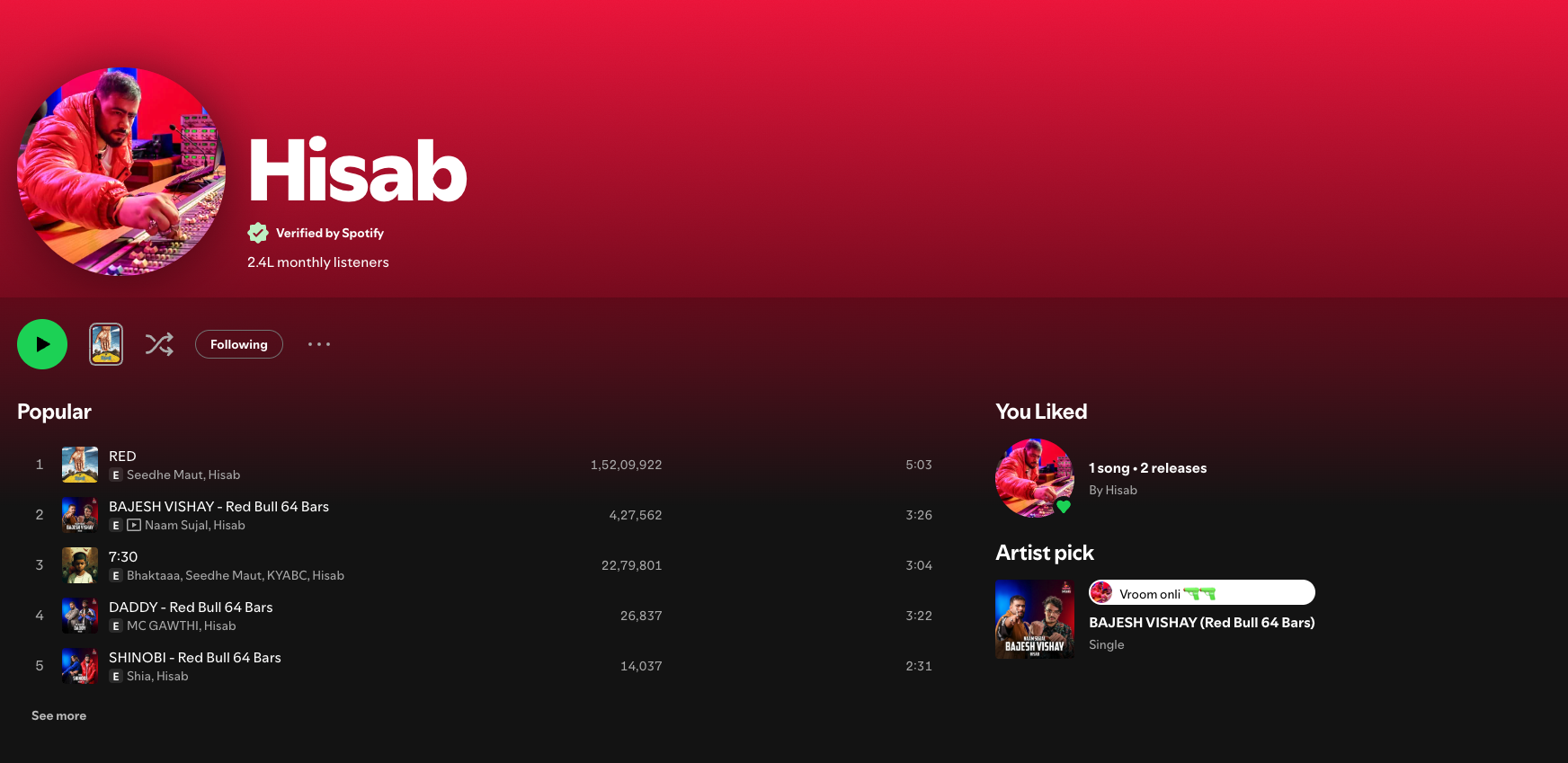
His two most important records sit on either side of that line. Red, his solo production for Seedhe Maut, was built on purpose to make a statement. He talks about it the way people talk about something they cannot repeat.
“You cannot make another Red.”
Boom Shaka was a different animal: a bucket-list collaboration with artists he looked up to, built with mainstream elements, shared with a co-producer. It is his biggest number. Red is the one he talks about with his voice dropping.

That is not hypocrisy. It is a business model. The day shift funds the night shift. The night shift is what makes you worth hiring by day.
“Nobody streams the night shift.”
And he adds, "You should".
04. What the next ones are walking into
I should say where I sit. I work on the other side of this industry, the side that takes a finished creation and runs with it. I sell the day shift for a living. So I notice when the dreams change.
A decade ago, the young musicians around me said things like: I want to be the best harmonium player alive. Now the dream I hear most is: I want to play Coachella. That is a fair dream. It is also a day-shift dream, a destination measured by the size of the crowd. Very few people coming up seem to dream about the night shift anymore.
And the shortcuts to the day shift have never been cheaper. Type fifteen words into an AI music tool and something finished-sounding comes back. An influencer can decide on a Monday that he is a DJ. Hisab is not bitter about any of it; where the execution is real, he gives it credit. But he has a stricter idea of finished than any tool. A track is done, he says, while it still has its warmth. Overwork it and the human leaves.
You only learn where that line sits by crossing it hundreds of times. He reckons the first five or six hundred beats a producer makes are a slab of stone.
“You are not making music yet. You are carving the material you will one day make music from. ”
The day shift will happily let you skip the slab. The night shift is where you carve it. I asked him about the obvious day-shift milestone. One of his records has crossed a hundred million plays. The first word he reached for was "weird". Then "numb". Four thousand people singing a song word for word, a six-minute moment for them, and the kid who made it in a bedroom unable to take it in. The number is real. It just was not where the feeling lived.
05. The leap question
Every young artist eventually asks the same thing, and so did I. When do you quit the job and go all in?
“I have friends on both sides. One works a delivery-app job all week and plays band gigs on weekends, and feels he gives music too little of himself. One went all in, and feels his music is not connecting enough to pay for itself. ”
Both are struggling. Just differently. Hisab's honest answer is that you never know until you jump, and jumping is no guarantee. Know that before you go. But the two-shift idea quietly offers a third road. The question was never job or art. The scene now lets art have a day job. The real question is whether you know, at any given hour, which shift you are working, and whether you still turn up for the second one once the first one starts to pay.

Back to the ringtone. Somewhere a former classmate's phone is ringing with a Hisab beat. That is the day shift doing its job, travelling further than any classroom ever could. It is real, and it was earned.
But he is not in that phone. He is somewhere past five in the evening, thirty minutes into the quiet, waiting for the click. He told me he used to make music from a place of hurt. Now he wants to make it for the joy of it, travel more, and make the kid who started all this proud. That kid never had a day shift. He only ever had the night.