Every so often someone I respect will look across a table at me and ask, in effect, how do you build culture. They mean it seriously. They have a brand, or a city, or a room full of talent, and they want the steps. And I go quiet for a second longer than is comfortable, every time, because I do not know how to tell someone to build knowledge, feeling, inheritance and instinct on a phased plan with a launch date. Those are the raw materials of culture. Not one of them can be installed.
So I do the only useful thing I know how to do. I talk them out of doing it in one shot. Because you simply cannot, and most of what I am paid for is saying that out loud before the money is spent.
The question arrives at my desk wearing different clothes almost every week. Build me a festival. Build me a deck that has never been seen before, and make it cultural. Can we get a few acts together, something with a bit of an edge. They look like three different briefs. They are the same brief. Every one of them is really asking the same thing: make me culture, make it feel deep, and make it by the deadline, once.
I understand the instinct completely, because culture, when it works, looks like a single magnificent object. A festival everyone talks about. A night that becomes a story. From the outside it looks like a thing someone built, so people reasonably assume you can commission the thing. What they are seeing is the idol. What they are not seeing is the years of quiet repetition that made the idol possible, the machine that was already running long before anyone arrived to photograph it.
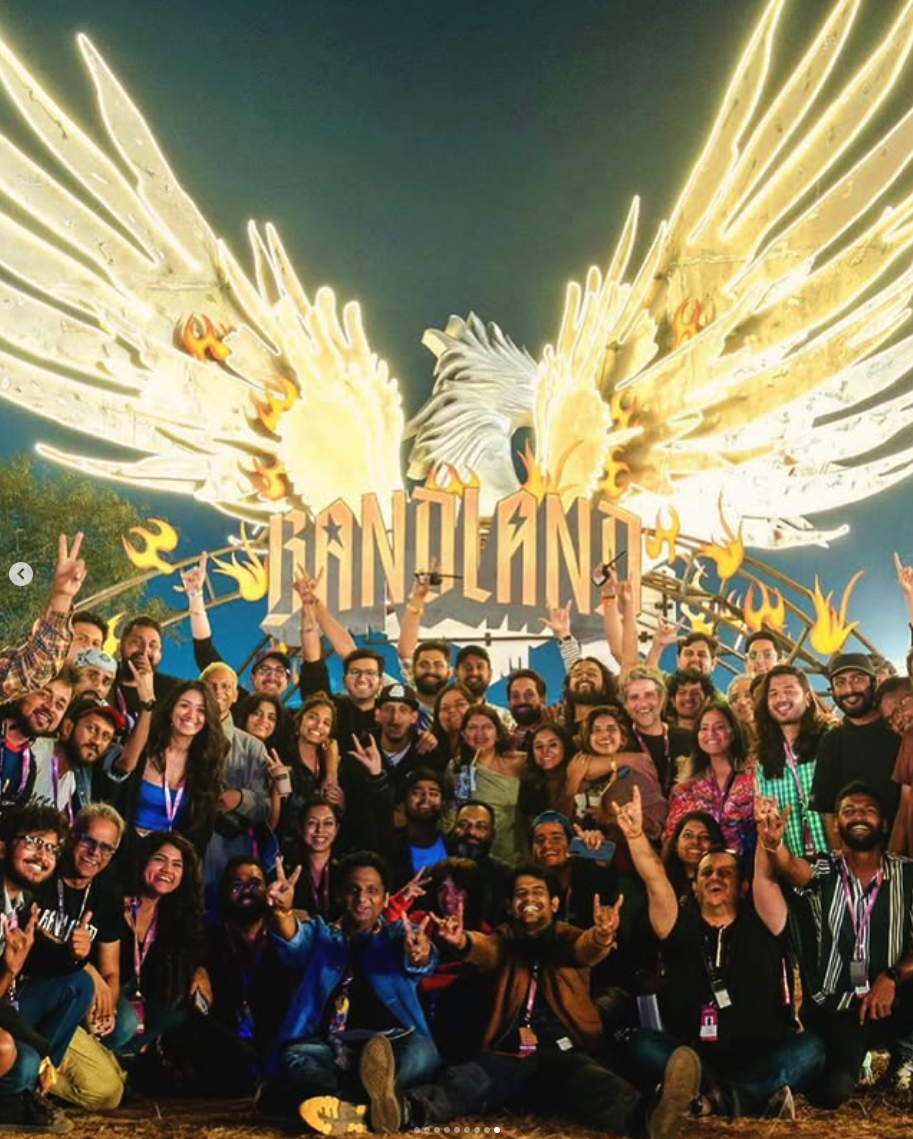
Here is what I have learned, mostly by watching people spend a great deal of money learning it the other way. Culture is not an object. It is the output of a circuit that has already been running. When you fund the one-shot, you are buying the output and skipping the machine. You get the shape of culture with none of the load-bearing structure underneath, and everyone can feel the difference even if they cannot name it. It photographs well, and it does not come back.
From where i come from; the creative economy around Kolkata's Durga Puja was valued by a 2019 British Council study at roughly 32,000 crore rupees, and UNESCO placed it on its heritage list in 2021 as the largest public art festival in the world. Nobody built that in a quarter. It is the same format run for a century, clay pulled from the river and given back to it, iterated a little every single year. The bones stay identical so the city can trust it. The skin changes every year, the themes, the pandal art, the small novelties, so the city has a reason to come and look again this autumn and not only remember the last one. That is the machine in one breath. Repetition earns the trust, iteration earns the return, novelty earns the attention. It has been turning for a hundred years, which is precisely why you cannot commission your own version of it by Diwali.
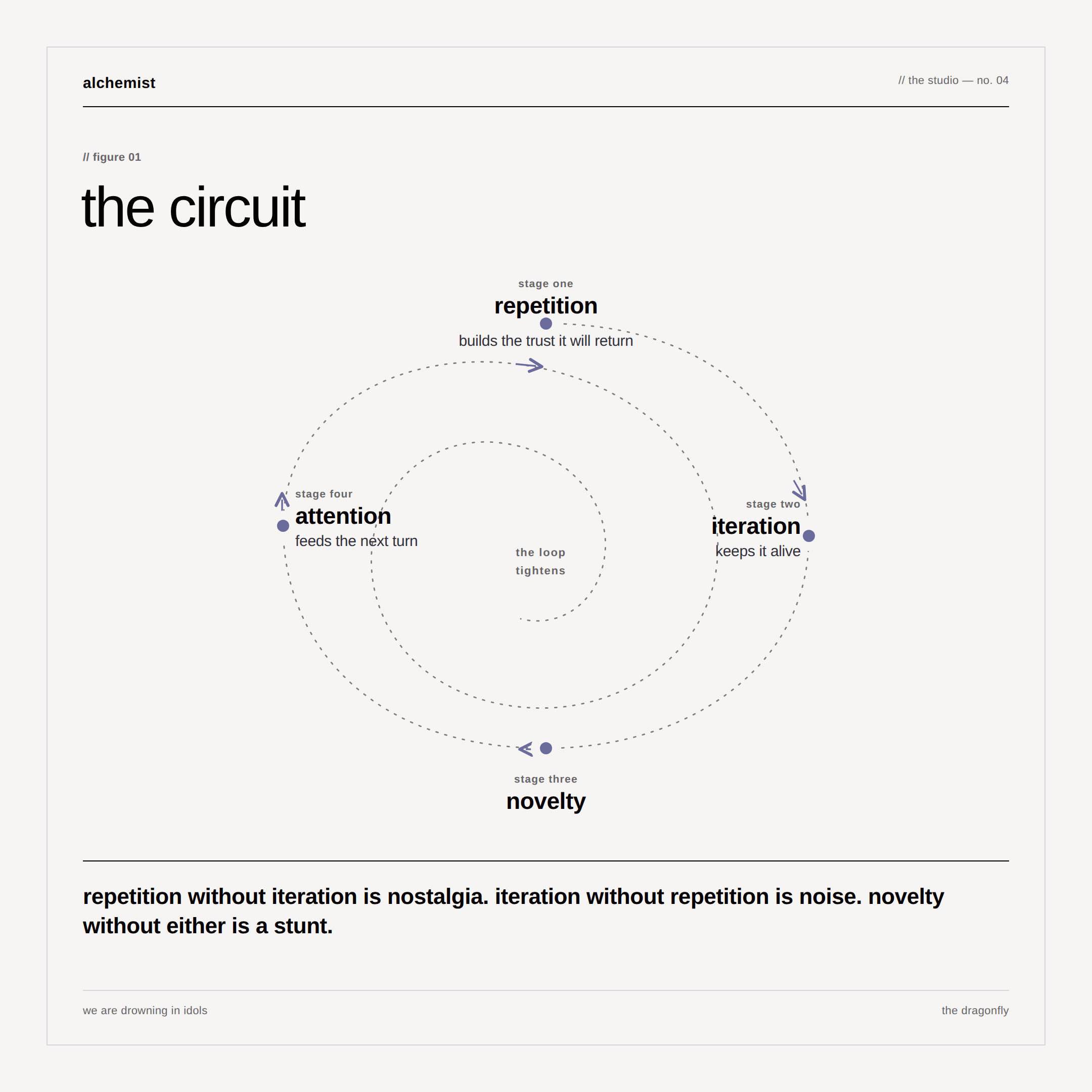
You repeat something until people trust that it will return. That trust is the foundation. It is boring, and it is non-negotiable. Then, because pure repetition eventually goes stale, you iterate, small changes, one variable at a time, so the thing stays alive without breaking the promise that it will come back. Every so often that iteration throws off something genuinely new, and the novelty is what earns fresh attention from people who were not watching before. That attention feeds the next repetition, and the loop tightens. Trust, aliveness, attention, trust again.
“Repetition without iteration is nostalgia. Iteration without repetition is noise. Novelty without either is a stunt.”
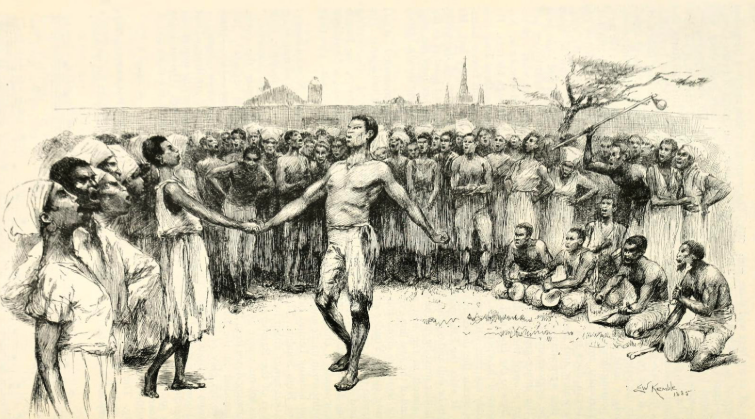
You need the whole circuit, turning, over time, which is the one ingredient nobody wants to hear is required. And it does not even need money to run, which is the part that should end the conversation. In 1817 New Orleans permitted enslaved and free Black people to gather in one square, on one day, every week. That single repeating Sunday, given almost nothing else, is where the drumming and the call-and-response compounded across decades into the root system of nearly all the music you have ever loved. No budget built that. A format that repeated built that. If a circuit can produce jazz out of one sanctioned Sunday, the excuse that you lack the resources to build culture properly does not really survive contact.
This is the thing we have quietly built our company around, if I am honest about what Alchemist is under the decks and the pitches. Not the ability to make you a beautiful object once. Anyone with a budget can rent that. The thing we believe in, and the thing we try to build for the people who come to the desk, is the circuit. The unglamorous loop that turns a good night into something a city expects, and eventually into something a city cannot picture itself without.
I do not know if there is a single right way to do culture. I am suspicious of anyone who says there is. But if there is a wrong way, it is the one-shot. The magnificent idol built to be admired once and forgotten by the next quarter. We are drowning in those. They are beautiful, and they do not come back.
What comes back is the circuit. Build the loop, feed it, and have the patience to let it turn. That is the whole answer to the question I am never ready for. It is just never the answer anyone wants on the day they ask.
Watch and read alongside
The three layers · look at this with me
Layer 02 · Reference clips
- Kumartuli: where the goddesses are made. Inside the Kolkata potters' quarter where the idols are built from river clay, months before the festival. Watch for the hands. This is the format at the point of production, before anyone calls it culture.
- Durga idol immersion (Bisorjon). The tenth day. The goddess going back into the water so the format can run again next year. Watch this to see why the dissolving is not the end of the machine, it is the reset.
- The history of Congo Square. How one sanctioned Sunday gathering, repeated for decades under slavery, became the rhythmic source of American music. Watch for the word "every." The repetition is the whole mechanism.